WMO Report: The World’s Water is Changing Fast
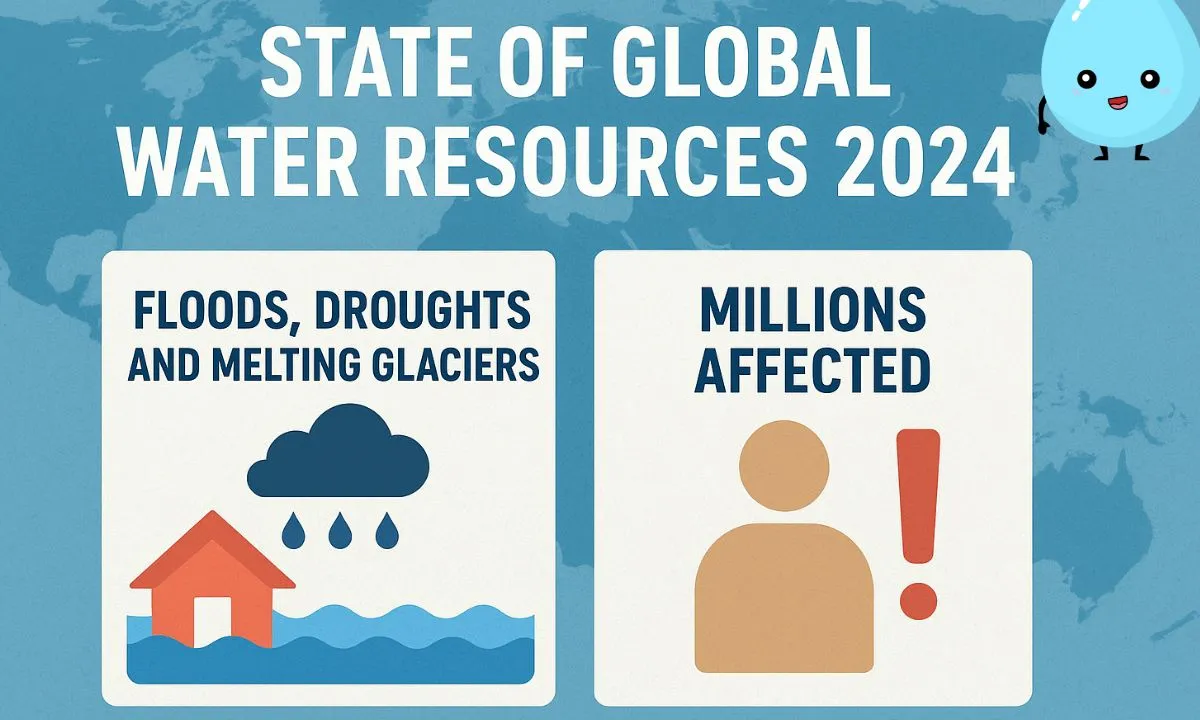
The latest State of Global Water Resources 2024 report by the World Meteorological Organization shows how floods, droughts, and melting glaciers reshaped the year.
Only one-third of river basins had normal conditions. Glaciers lost ice for the third year in a row. Extreme heat and El Niño worsened drought in South America and southern Africa. Many other regions were hit by devastating floods.
The key highlights of the report in summary tells us;
- In 2024, 60% of rivers had abnormal flows (either too much or too little water).
- “2024 is the 6th year in a row showing an erratic hydrological cycle.”
- Some regions faced severe drought, others multiple floods.
- All glaciated regions lost ice for the third year in a row.
According to the report,
“The hydrological cycle is undergoing significant changes, with increasing global variability. Mainly due to climate change and human interventions.”
Coming to Groundwater Levels in 2024, only 38% of wells worldwide had normal levels last year. About 25% were below normal and 37% above normal.
The 2024 year continued the retreating glaciers trend due to global warming as the main cause. 2024 marked the third straight year of global glacier loss across all 19 glaciated regions, totaling 450 Gt of global glacier mass loss, which equals 1.2 mm sea-level rise, according to WMO.
Also Read: Billions at Risk as Glaciers Melt Faster Than Ever – UN Report
2024 brought widespread floods, droughts, and cyclones, leaving millions affected and causing major economic and humanitarian losses worldwide.
- Africa: Severe floods caused ~2,500 deaths, displaced 4 million, and damaged infrastructure and agriculture.
- Europe: Worst floods since 2013. Over 335 deaths and €18 billion in losses from multiple extreme events.
- Asia and the Pacific: Record rains and cyclones, including Typhoon Yagi and Afghanistan floods, led to 1,000+ deaths and humanitarian crises in the regions.
- Brazil: Deadly southern floods killed 183 and displaced 2.4 million. The drought hit the Amazon basin and 59% of the territory of the country.
The report links water monitoring to the UN’s Early Warnings for All (EW4All) initiative. Reliable data on rivers, lakes, groundwater, and glaciers is critical for early warning systems.
Also Read: iPhone 17 Carbon Footprint: Interesting Facts
The report calls for urgent action: more monitoring, better data sharing, and stronger water management as climate change intensifies pressures worldwide.